



Are you thinking about starting to practice yoga? If so, and you're feeling a little lost, the following post is for you. Throughout this article, we'll explain what the famous "asanas" are, what types there are, which ones you should start with if you're a beginner, what mistakes to avoid, and more.
Yoga postures or asanas: What are they?
When we think of yoga, the first thing that comes to mind is a whole lot of postures, or rather, asanas. But what are they really? The word asana comes from Sanskrit and literally means "posture." Originally, it referred only to the seated posture for meditation, but over time it expanded to encompass all the body positions we know today in yoga. From the gentlest to the most challenging, each asana pursues a common goal: uniting body, mind, and breath in a single instant.
Beyond flexibility or strength, what makes asanas special is their ability to generate body awareness. They invite us to listen to the body, respect its limits, and flow with each inhalation and exhalation. Practicing yoga postures isn't just about training muscle; it's a path toward mental calm, vital energy, and inner balance.
Benefits
As we were saying, asanas aren't just a set of movements that are nice to look at, but a powerful tool that transforms body and mind from the inside out. Practicing them consistently gives us benefits such as:
- They improve flexibility and strength: Each posture works different muscles and joints. Over time, the body gains elasticity and grows stronger.
- They reduce stress and anxiety: Through conscious breathing and concentration on the present moment, asanas help calm the mind and ease accumulated tension.
- They promote circulation and body posture: There are specific postures that stimulate blood flow and relieve discomfort such as heaviness in the legs or stiffness in the back.
- They increase energy and vitality: Far from exhausting us, a well-guided yoga practice renews vital energy. By stretching, oxygenating, and relaxing, the body responds with greater lightness and dynamism.
- They contribute to better rest: Yoga invites us to slow down, which translates into deeper, more restorative sleep.
- They strengthen concentration and memory: By demanding full attention, yoga postures train the mind to focus on one thing at a time. This improves not only the practice but also the ability to concentrate while studying, working, or in daily life.
- They strengthen the immune system: Gentle movement, deep breathing, and the reduction of stress have a positive impact on our natural defenses, helping to prevent illness and making us feel more resilient.
- They foster self-confidence and self-esteem: Gradually overcoming each challenge on the mat strengthens confidence in ourselves and reminds us of what we are capable of.
Types of yoga postures
Yoga is a universe of possibilities, which is why some postures invite us to feel as firm as a tree, others help us release tension from the ground, and others challenge us to connect with our breath in more intense positions. The important thing is to remember that there are no "better or worse" levels; each type of asana fulfills a function and accompanies us on the path toward balance. Let's look at the main types:
Standing yoga postures
Standing postures are ideal for gaining strength, stability, and energy. They represent the connection with the earth and remind us of the importance of staying grounded in everyday life. Some of the best-known are:
- Tadasana (Mountain Pose): the basis of many other asanas, it teaches you to align the body and breathe consciously.
- Virabhadrasana (Warrior Pose): strengthens the legs and arms while activating concentration and confidence.
- Trikonasana (Triangle Pose): perfect for stretching the back and sides, providing flexibility and balance.

Seated yoga postures

Sitting calmly opens the door to introspection, which is why these asanas are common in meditation practices and help improve the flexibility of the hips and spine. Among the most practiced we find:
- Sukhasana (Easy Pose): the classic meditation posture, which promotes calm and mindfulness.
- Ardha Matsyendrasana (spinal twist): revitalizes the spine and stimulates digestion.
- Baddha Konasana (Butterfly Pose): ideal for opening the hips and relaxing the lower back.
Prone yoga postures
This group of postures works the back, arms, and abdomen intensely, as well as activating circulation. Although it's true that they are more demanding, they also offer great benefits for energy and vitality:
- Adho Mukha Svanasana (Downward-Facing Dog): one of the most famous, it stretches the whole body and calms the mind.
- Bhujangasana (Cobra): strengthens the back and opens the chest, stimulating deep breathing.
- Salabhasana (Locust): activates the lower back muscles and improves posture.

Supine yoga postures
When we lie down on the mat, the body surrenders to gravity. These postures are perfect for relaxing, stretching gently, and working on opening the chest:
- Setu Bandhasana (Bridge): strengthens the glutes and back while opening the heart.
- Supta Baddha Konasana (Reclining Butterfly): a restorative posture that calms the mind and releases tension in the pelvis.
- Savasana (Corpse Pose): the simplest and, at the same time, one of the most powerful. It invites you to let go and rest deeply.
10 Best yoga postures for beginners

If you're taking your first steps in yoga, you don't need to start with complicated postures. Our recommendation is that you begin with accessible asanas that help you listen to your body, work on your breathing, and gradually gain confidence. An example of postures for beginners:
- Balasana (Child's Pose): Kneel on the mat, bring your big toes together, and sit on your heels. Lean forward, resting your forehead on the floor, and extend your arms forward or to the sides.
- Apanasana (Wind-Relieving Pose): Lie on your back and bring both knees to your chest. Gently hug your legs with your arms and hold the position, breathing in a relaxed way.
- Viparita Karani (Legs up the Wall): Sit sideways to a wall and, gently, raise your legs, resting them against the wall while you lay your back on the floor. Keep your arms relaxed at your sides.
- Utkatasana (Chair Pose): Stand with your feet hip-width apart. Bend your knees as if you were sitting in an invisible chair, keep your back straight and your arms extended upward.
- Cat-Cow (Marjaryasana and Bitilasana): Rest your hands and knees on the floor. Arch your back upward (Cat) and then lower your abdomen while lifting your chest and gaze (Cow), alternating slowly.
- Padangusthasana (Forward Bend with foot grip): Standing, bend your torso forward and try to hold your toes with your hands, letting your head and neck relax. Keep your knees slightly bent if you need to.
- Setu Bandha Sarvangasana with support (Assisted Bridge): Lie on your back with your knees bent and your feet resting on the floor. Raise your pelvis and place a block or cushion underneath to support it, keeping your shoulders relaxed.
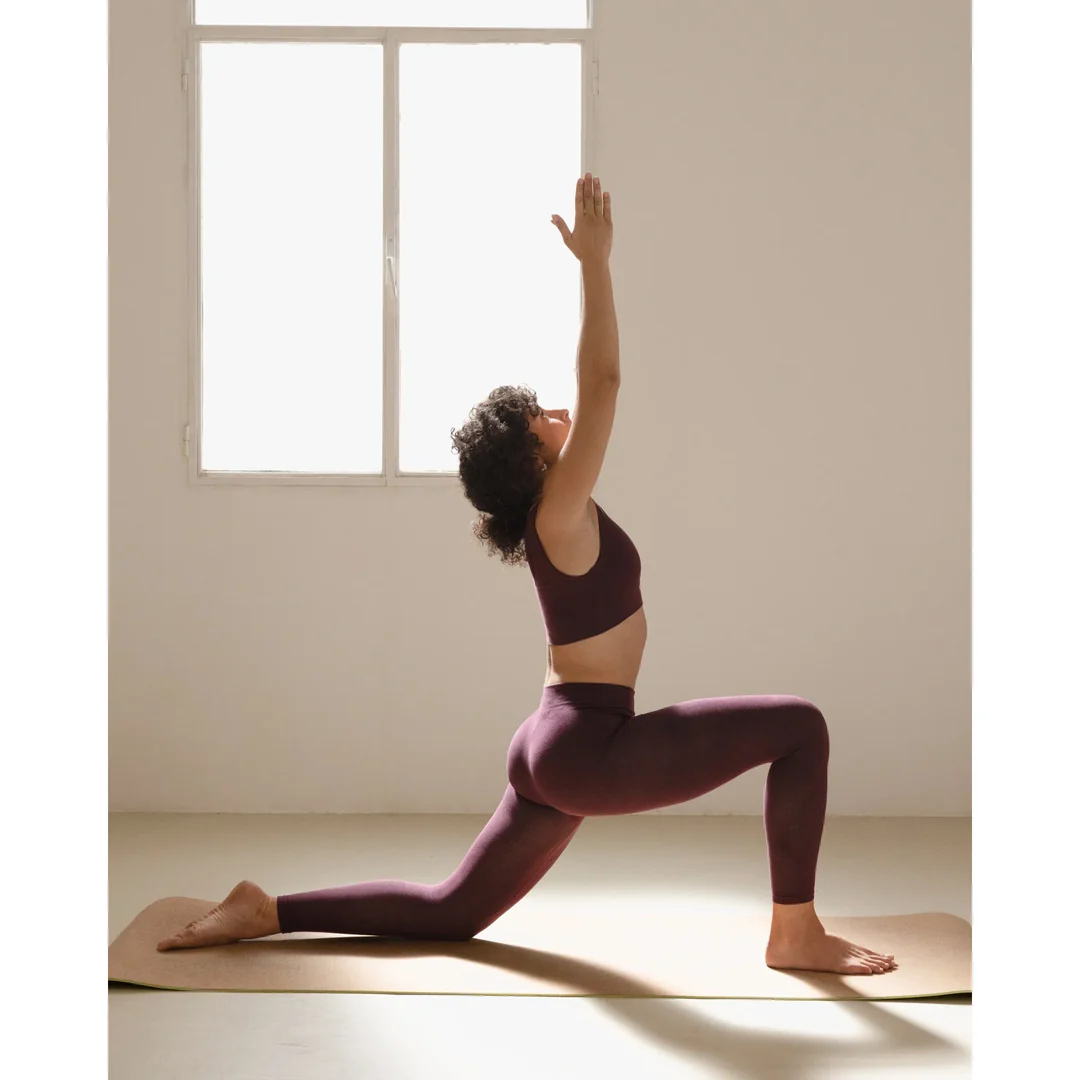
- Anjaneyasana (Low Lunge): From a standing position, take a step forward with one foot and bend your front knee, leaving your back knee resting on the floor. Then raise your arms over your head.
- Jathara Parivartanasana (Supine Twist): Lying on your back, bring your bent knees toward your chest and let both knees drop to one side while gently turning your head to the opposite side. Keep your shoulders on the floor.
- Sukhasana with conscious breathing: Sit with your legs crossed, your back straight, and your shoulders relaxed. Place your hands on your knees and focus on slow, deep breathing.
What are the recommendations for yoga beginners?

We know that starting out in yoga raises questions: Am I doing the posture correctly? What do I need to practice? How much time should I dedicate to it? The good news is that there isn't a single correct way to do it. Yoga is a personal practice and every step counts. If you're just starting out, here are some recommendations that will make your experience much more pleasant and mindful:
- Create your own space of calm: You don't need a big studio or sophisticated accessories. A mat, a quiet corner, and comfortable clothes are enough to begin your practice.
- Listen to your body: Yoga isn't about forcing, but about respecting your limits. Progress gradually, use blocks or cushions if you need to, and remember that each body has its own rhythm.
- Breathe consciously: Breathing is the guiding thread of every practice. Inhaling and exhaling calmly will help you keep your focus, relax, and deepen each posture.
- Be consistent, even if only for a short time: It's better to practice 10 minutes a day than an hour once in a while. Regularity is the key to feeling the benefits in the long term.
- Drop the comparison: Each body is different. Avoid comparing yourself with others or with the images you see on social media.
- Complement it with a mindful life: Yoga doesn't end when you roll up the mat. What you learn in the practice, patience, calm, respect, you can apply in your day to day.
Common mistakes and how to avoid them
As with any new discipline, when starting out it's normal to make mistakes. The important thing isn't to avoid them all from the start, but to be aware of them and learn to correct them with patience. Here we tell you the most common ones and how to solve them:
Forcing more than you should
Many beginners believe that the more they stretch or go down, the better the posture will be. In reality, yoga isn't about reaching the limit, but about respecting your body.
How to avoid it: progress gradually, use blocks, straps, or cushions when you need them, and remember that each day your body may feel different.
Forgetting to breathe
It's common to concentrate so much on the posture that the breath gets blocked. However, it's the breath that gives life to movement.
How to avoid it: connect each inhalation and exhalation with the asana. If you notice that you're holding your breath, stop, breathe, and resume calmly.
Practicing without proper alignment
Poor placement of the feet, hips, or back can cause discomfort or even injuries.
How to avoid it: pay attention to the teacher's instructions or follow reliable visual guides. Use a mirror to check your posture at the start.
Believing that yoga is only physical
Reducing yoga to simple stretching is a common mistake. Asanas are a tool, but the practice also includes breathing, meditation, and awareness.
How to avoid it: dedicate a few minutes to closing your eyes, breathing deeply, and observing how you feel after each practice.
At Clotsy Brand, activewear moves with you
Comfort and style don't have to be at odds, and the sustainable activewear by Clotsy Brand proves it! Designed with soft fabrics, organic cotton, and cuts that adapt to your body, they're perfect for practicing yoga, Pilates, or any activity that requires freedom of movement.
From leggings to sports tops, and our collection of barefoot socks and barefoot footwear, every piece is designed to accompany you in every posture and workout, without restrictions and with style. Combine them with each other or with your favorite accessories and create looks that reflect your authenticity, even at the gym or at home.
Find the ideal outfit for your sports activities at Clotsy Brand, the sustainable clothing store!
Conclusion
The path of yoga doesn't seek perfection, but constancy and awareness. Every posture, every breath, and every moment you dedicate to your practice adds up in your physical and mental well-being. So unroll your mat, breathe deeply, and take the first step toward a practice that can transform your day to day.
Leave a comment