




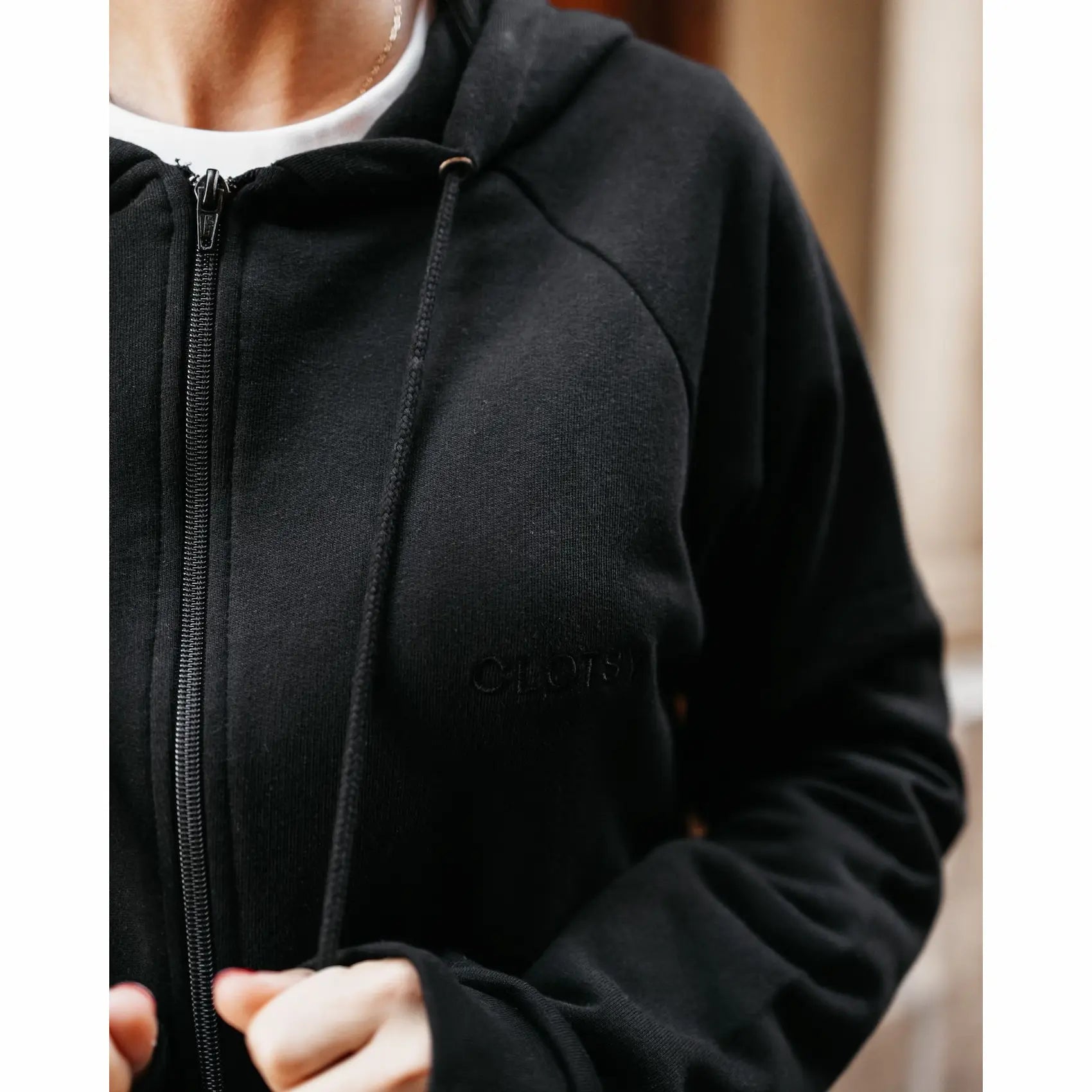
Today we're here to talk about a topic we find really interesting: how is recycled cotton produced? How do you turn a cotton garment back into fibre to make fabric all over again?
Sustainable fashion is a trend that is here to stay, and more and more brands are making an effort to take that step towards sustainability.
That's why it's so important to tell apart the companies that genuinely try from those that just want to project a false image of sustainability to sell more. You can take a look at our article on what greenwashing is and examples.
But let's get to the point...

WHAT IS RECYCLED COTTON?
We can define recycled cotton as obtaining cotton fibres from cotton fabrics (whether remnants or garments) that can be reused. It's also known as recovered or regenerated cotton. We can distinguish between two types of recycled cotton:
Pre-consumer recycled cotton
It's the cotton that is produced from fabric scraps.
This means that when a garment is made, it has to be cut into its component parts, e.g. sleeves, front, back... When they're cut, there are fabric scraps left over that can't be reused; up to 20% of the total fabric ends up in the bin – outrageous, right?
Well, pre-consumer recycled cotton manages precisely to shred all those leftover scraps to turn them back into fabric.
Post-consumer recycled cotton
This cotton is produced from garments that have reached the end of their useful life, such as sustainable jeans or 100% cotton T-shirts.
But now a problem arises: most of the recycled cotton that's produced is pre-consumer, and why is that? you might ask. Well, it turns out that the manufacturing process for post-consumer recycled cotton is very expensive, mainly due to two problems:
- The material the recycled cotton is made from must be 100% cotton, which means we have to remove from the garment everything that isn't cotton: labels, buttons, the collars of T-shirts, etc. It's a manual process that is very costly to carry out on a large scale.
- On the other hand, there's an increasing tendency to use more and more synthetic fibres and to mix these with natural fibres such as cotton, making later recycling impossible.

Recycled cotton production process
First, the fabrics are separated by colour and then, through a mechanical process, they're shredded to be converted back into cotton fibres. This shredding process is harsh and puts the fibres under stress that can cause them to break and tangle. Those cotton fibres can then be used to produce recycled cotton yarn again.
The fibre can't have the quality of virgin cotton, since the uniformity and length of the fibres will be affected, thus limiting the end-use application.
Benefits and challenges of recycled cotton
- Recycled cotton can be used for products such as insulation products, mops, rags, etc.
- The savings in energy, water and dye are very large because we're using products that have already been made. On the other hand, we avoid producing that raw material again, thus avoiding deforestation and the wear it causes to the land.
- To produce higher-quality fabrics such as textiles, cotton must be mixed with other fibres, so it can't be infinitely recycled.
- The production cost of recycled cotton is higher than that of virgin cottons, so it's in our hands, as consumers, to choose these fibres over others and opt for more sustainable consumption.

Conclusion
All in all, the use of recycled cotton when making new garments is a sustainable option that more and more people are demanding, also due to the fact that organic cotton consumes a large amount of water for its production.
It's also a fact that it currently has to be mixed with other fibres in order to produce new garments.
So, in order to produce fabrics with recycled cotton, we have to mix it with virgin cotton or polyester. At Clotsy we find the recycled polyester option really interesting, since we turn single-use plastics (which apparently were rubbish) into garments with a much longer useful life than that bottle or bag you barely use for a few minutes.
In short, recycled cotton is a really interesting fabric that still has a lot of untapped potential and that we'll see more and more in our everyday lives. Whenever we can choose sustainable options, we should go for this type of material.

Leave a comment